
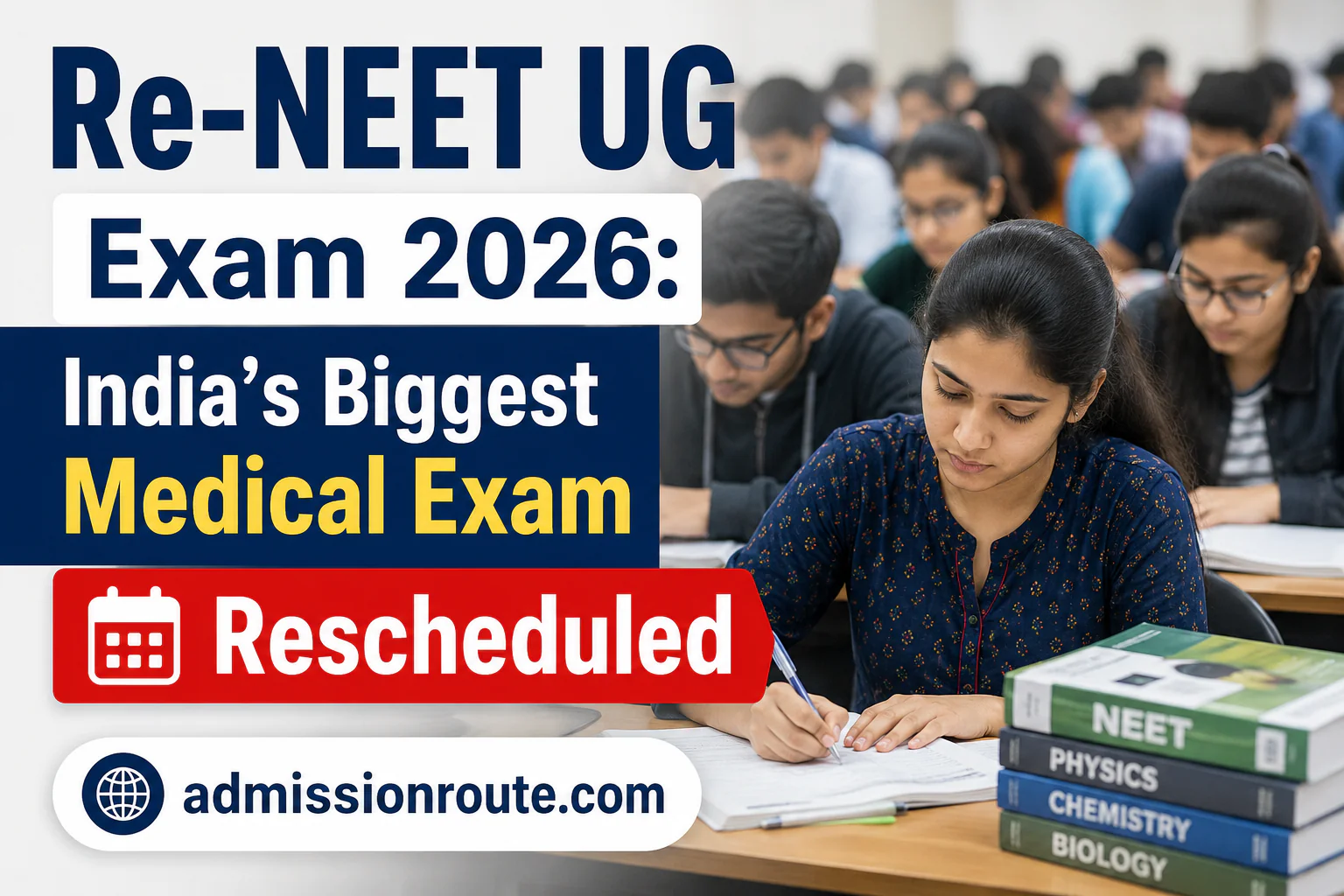
On the morning of May 3, 2026, over 22 lakh students across India sat down to write the NEET UG exam — the gateway to MBBS, BDS, AYUSH, and other undergraduate medical courses. For most of them, it was the culmination of years of relentless preparation, sleepless nights, and enormous financial sacrifice. For some, it was their second or third attempt. For all of them, it was supposed to be the finish line.
It wasn’t.
Within hours of the exam concluding, disturbing reports began emerging from multiple states. By May 12, 2026, the National Testing Agency (NTA) made it official: the NEET UG 2026 examination was cancelled. The reason? A confirmed, widespread question paper leak — one of the most serious integrity failures in the history of Indian competitive examinations.
How the Leak Happened- NEET UG 2026
The unravelling began when the Rajasthan Police Special Operations Group (SOG) discovered a “guess paper” that contained 140 questions identical to those that appeared in the actual NEET UG 2026 exam. This was no coincidence.
Further investigation revealed something far more alarming. A PDF document containing approximately 500–600 questions had allegedly been circulated on Telegram as early as April 29, 2026 — four full days before the examination. Around 180 of those questions reportedly matched the final NEET UG 2026 paper. Investigators also traced similar content to a coaching institute in the Latur district of Maharashtra, where videos and test series material mirrored actual exam questions.
The Central Bureau of Investigation (CBI), which was brought in to lead the probe after the government escalated the matter, made a chilling disclosure to a Delhi court: the alleged leak appeared to have originated from a source inside the NTA itself. CBI teams conducted raids across Rajasthan, Maharashtra, and Haryana, arresting several accused and recovering leaked papers, digital chats, and other incriminating evidence.
The breach, authorities concluded, had not occurred at individual exam centres. It had happened at the question bank level — meaning the integrity of the entire examination was compromised from the very source.
The Cancellation of NEET UG 2026— and What NTA Said
On May 12, 2026, the NTA released an official press release cancelling the NEET UG 2026 examination. In its statement, the agency said that inputs from central agencies and law enforcement had confirmed irregularities in the examination process. It noted that the government of India had reviewed the findings and concluded that allowing the current exam results to stand would further erode student trust in the national testing system.
NTA was unequivocal: the decision to cancel was made in the interest of students and to uphold the integrity and fairness of the examination.
The announcement sent shockwaves through India’s medical aspirant community. Students who had scored 700 or 720 — effectively perfect scores — found their results wiped out overnight. Social media erupted with anger. Student groups demanded the abolition of the NTA altogether. Pleas were filed in the Supreme Court seeking oversight of the re-examination process.
22 Lakh Students — and the Human Cost
Numbers rarely tell the full story, but in this case they are staggering. Over 22 lakh (2.2 million) students had registered for NEET UG 2026 — all of them now affected by the cancellation.
For repeat aspirants on their second or third attempt, the news was particularly crushing. Many had left jobs, moved cities, and spent lakhs on coaching programmes. For those from economically weaker backgrounds, the cost of another month of preparation — housing, study material, food — is not trivial.
The cancellation also created a ripple effect across the medical admissions calendar. MBBS, BDS, and AYUSH courses across central and state institutions were thrown into uncertainty. Counselling timelines that institutions and students had planned around were now indefinitely delayed.
Union Education Minister Dharmendra Pradhan addressed the nation, acknowledging the gravity of the situation. Notably, he also announced that future NEET examinations would gradually shift towards a Computer-Based Test (CBT) model — a structural reform that many education experts have long advocated as a way to reduce paper-leak risks.
The Re-NEET UG Exam: June 21, 2026
Within days of the cancellation, the NTA announced the date for the re-examination: June 21, 2026, a Sunday. The re-exam will be conducted in the same offline, pen-and-paper mode as the original examination. Here are the key details candidates need to know:
- No fresh registration required — all students who appeared in the May 3 exam are automatically eligible, using the same application data.
- Application fees will be refunded in full — no additional fees will be charged for the re-examination.
- New admit cards will be issued — available on neet.nta.nic.in around June 14, 2026. Original admit cards are invalid.
- Correction window open — from May 15 to May 21, 2026, students can update their address and select preferred exam city centres.
- Syllabus and format unchanged — a completely new set of question papers will be prepared; candidates should prepare across all difficulty levels based on NCERT.
The re-exam is expected to draw the participation of all 22 lakh+ registered candidates, making it one of the largest single-day examinations in the world.
What Students Should Do Now
Education experts and coaching institutes have advised students to approach the Re-NEET with a clear head and a structured plan.
The May 3 exam, despite being cancelled, serves as a high-quality diagnostic. Students should review which topics cost them marks, identify weak areas, and focus preparation accordingly. The 40-day window before June 21 is sufficient for a focused revision drive, particularly for students who were already exam-ready.
The new question paper will be entirely fresh. Attempting to source or rely on any pre-exam material circulating online would be both futile and illegal — investigators are actively monitoring such activity.
Psychologically, experts note that the biggest challenge for many students will not be the syllabus, but the mental reset required after the emotional upheaval of the cancellation. Students are encouraged to take a brief break, acknowledge the frustration, and return to preparation with renewed focus.
A Test of More Than Knowledge
The NEET 2026 crisis has reignited a years-long debate about the NTA’s ability to conduct large-scale examinations fairly and securely. The parallels to NEET 2024 — which was also mired in controversy — have not gone unnoticed. This time, however, the scale of the breach left the authorities with no option but a full cancellation.
The shift toward Computer-Based Testing announced by the Education Minister may be the most consequential outcome of this scandal in the long run. A CBT system, with randomised question sets and real-time monitoring, is significantly harder to compromise through the kind of centralised paper-leak that brought down NEET 2026.
For the 22 lakh students who will sit down again on June 21, this exam is more than a test of biology and chemistry. It is a test of resilience — and of their faith that the system, however flawed, can still give them a fair shot at the future they have worked so hard for.
The Re-NEET 2026 is their second chance. And for the NTA, it may well be its last.
KEY FACTS AT A GLANCE- RE NEET UG EXAM 2026
| Original Exam Date | May 3, 2026 |
| Cancellation Announced | May 12, 2026 |
| Re-Exam Date | June 21, 2026 (Sunday) |
| Students Affected | 22 lakh+ |
| Admit Card Release | ~June 14, 2026 |
| Correction Window | May 15–21, 2026 |
| Exam Mode | Offline (Pen & Paper) |
| Investigation Authority | CBI |